Thursday, November 22, 2012

Repairing Chips and Dents in Pipes

Can chips and dents in pipes be repaired?

Yes, most of these types of issues can be repaired. Such repair work is often referred to as a "fill" or "patch." Most commonly, the repair is done with a compound made of wood dust and various binders that help adhere the "putty" to the pipe.

            Image source: rebornpipes.wordpress.com

If you decide to go ahead with repairs, there are many expert craftsman with outstanding reputations for quality work. They should gladly provide a quote for such a repair. Depending on the extent of the damage and who does the work, the cost should be quite reasonable.

Wednesday, November 21, 2012

"Lakeland" Tobaccos

What are "Lakeland" tobaccos?


I've never smoked any of them, but Lakeland tobaccos are produced by Samuel Gawith and come in a variety of different blends.

             Image source: firecured.blogspot.com

Lakeland is a region in England where Samuel Gawith company produces pipe tobacco and snuff. Many of Gawith's original snuff products, and now many of their pipe tobacco blends, are known to have a distinct soapy or floral aroma. The aroma isn't overpowering, and most claim it doesn't really have any effect on the flavor of the smoke. It's just their signature smell, so as to speak.

Sunday, November 11, 2012

Pipe Filters and Health Risks

Do pipe filters and similar devices reduce health risks and make smoking safer?

First, let me be clear that I am not an expert on smoking related diseases or cancer prevention. As to what constitutes "high" risk versus "low" risk, I am simply not qualified to say. If you have particular health concerns about smoking, I recommend speaking to your doctor.


It's important to acknowledge that all forms of smoking and tobacco use involve certain risks and health hazards. However, even if all the risk cannot be eliminated, there are several things that smokers can do to reduce dangers. Reducing the frequency and duration of smoking, smoking milder tobaccos, and using filters can help. But just reducing risks doesn't mean pipe smoking is "healthy" or "good for you." (Ironically, the 1964 Surgeon General's report indicated that pipe smokers who did not inhale actually lived longer than non-smokers and those who did inhale lived about as long as non-smokers! Some speculate this is because pipe smoking helps relieve stress, which is an aid to overall health.)

Now on to the question about pipe filters and reducing health risks.

On the one hand, we could note that filters have done nothing to make cigarette smoking healthier. In fact, some evidence indicates that filters have caused more harm for cigarette smokers. This is because filters impede access to tar and nicotine, which will cause a habitual smoker to unconsciously draw more deeply in order to obtain what his body craves. Also, the filters can cause a false sense of safety, which makes people feel free to smoke more frequently. These things combine to actually produce greater health risks.

On the other hand, testing and practical experience do seem to indicate that certain risks associated with smoking can be reduced by using filters and other similar devices.

For example, the patented Savinelli balsa filtering system has been tested both by the EURATOM Research Center of Ispra (Italy) and by the CHEMICAL & ENVIRONMENTAL TECHNOLOGY Inc. Research Center (USA) with very positive results: "..the filter has the ability to absorb 77% of the nicotine and 91% of the tar contained in tobacco without altering the flavour of same." Another great features of the Savinelli pipes with the filters system, is that the pipe can be smoked with or without the filter by using a simple converter or adapter tube that comes with each pipe.

As for the paper filters by companies such as Medico or Dr. Grabow, I have not seen any documentation or read any studies that present actual statistics or data. However, I can tell you that the paper filters work on the simple principle of breaking up the smoke as it passes through the filter. Nicotine, tar, and other irritants are trapped in the cellphane covered, absorbent paper (similar to the balsa wood in the Savinelli system. The fact that the filters turn brown (or darker) when used indicates that they are doing something. This is also true of the Denicool Pipe Crystals, which turn black during smoking demonstrating that they are absorbing some of the tar, nicotine, and juices produced during combustion of tobacco.

While smoking in any form is not healthy, it is fair to point out there are many things in life that are not good for us, but we still do them because we enjoy them. That's not a reason or excuse, of course, but simply an acknowledgement that all people take calculated risks throughout their lives. For example, eating at McDonald's can contribute to high cholesterol, obesity, and other serious health problems. Millions are addicted to coffee and drink it daily, even though the effects of caffeine (a stimulant) has adverse impact on health. Tens of thousands suffer from high blood pressure, but they still eat salt in high quantities, which dramatically increases various risks for cardio and vascular problems.

Having said all that, let me say again that I am no expert on these health issues. I try to stay informed so I can make reasonable decisions about my own practices. Where there are risks, I do whatever I can to minimize those risks, including using filters on many of my pipes. For those who find their consciences plagued about health concerns, I would suggest not smoking at all. Smoking is a pleasure to be savored, not something to force upon yourself if you have legitimate concerns. The bottom line is that we must take responsibility for our own lives and the choices we make.

Thursday, November 8, 2012

Is Your Tobacco Moist or Dry?

How can you tell if your tobacco is too wet or too dry?


Although not a very scientific approach, I recommend the "pinch test" as a simple method for determining whether or not your tobacco is too wet, too dry, or just right. Read more about moisture in tobacco pipe.

            Image source: electricfreeze.com

1. Take a pinch of tobacco with your thumb and first two fingers. Squeeze it gently and then let it go.

2. If it stays together in a clump for more than a second or two, it is too wet and needs to be dried before smoking.

3. If you let go of the pinched tobacco and the clump falls apart or expands loosely, it is about just right.

4. If it feels crunchy or crispy and will not pack at all into a clump, it is too dry and needs to be rehydrated before smoking.

Sunday, October 21, 2012

Pipe Tobacco Moisture Level

What is the ideal moisture level for pipe tobacco? Or does it really matter?

Unlike cigars, which experts agree should be kept within a humidity range of 68 to 75 percent, pipe tobacco isn't so easily pegged. The difficulty is due to the wide range of tobacco types and blends, the smoking qualities of different pipes, and even the different preferences of individual smokers.

         Image source: gizmodo.com

Even though it is difficult to identify a universal moisture level for pipe tobacco, most pipe smokers agree that when tobacco gets too dry or too wet, it is less enjoyable to smoke.

When tobacco is overly dry, it has a tendency to burn too easily and quickly. This produces an excessively hot smoke, which reduces the flavors and can create uncomfortable temperatures in the mouth. Although less common, a pipe that is burning too hot can also lead to burnout or other damage.

Conversely, when tobacco is too moist, it burns poorly and the pipe goes out frequently. This often causes the smoker to puff harder and draw deeper, which is a sure-fire recipe for tongue bite. The excess moisture can also cause a pipe to gurgle (a bubbling sound caused by moisture buildup in the shank and/or stem). Excess moisture, just like excessive dryness, also diminishes the flavor or taste of the tobacco.

As I mentioned above, the various types of tobacco and different blends may require varying levels of moisture for an optimum smoking experience. So you'll probably have to do some experimenting to find the right combination of factors for your own personal habits and pipes. But finding a balance that avoids either extreme of too dry or too moist is worth the trial and error.

Monday, October 15, 2012

Filling a Pipe

Are you having difficulty packing or filling your bowl using the Three-Layer Method? I can offer some suggestions and advice.

This is truly one of the most difficult things for new pipe smokers to learn. But on the other hand, let me encourage you not to be overly concerned with getting it perfectly. It is something that you will learn with practice and your skills will improve over time.

Please also keep in mind that the "Three-Layer Method", although an excellent way to fill your pipe, is not the only way it can be done. There are several other methods that are equally valid and useful. So if you're having trouble with the Three-Layer Method, perhaps you should try one of the other techniques, such as the "Frank Method" or "Air-Pocket Method".


             Image source: pipesmagazine.com

It's also important to note that each type of tobacco cut (cube, ribbon, flake, etc.) requires a slightly different method for packing the bowl in order to burn properly. Furthermore, each pipe will also have its own unique characteristics that affect precisely how the bowl should be filled. And lastly, every individual smoker has their own style for smoking that may require attention when preparing a pipe to smoke.

Since filling the bowl with tobacco involves several tactile matters (packing firmness, testing the draw, etc.), it is very difficult to convey the precise details in writing, but here are some general tips that may be helpful:
  • The goal of properly filling the bowl is to keep the tobacco steadily burning during the smoke and to ensure the draw is smooth and easy. Nothing more, nothing less.
  • Rough cube cuts should be packed firmly.
  • Flake cuts should be packed with medium firmness.
  • Ribbon, shag, or mixed cuts should be packed with a firmness that leaves a slight "springiness" or "mushiness" to the tobacco.
  • If your pipe continually goes out, you may have packed your bowl too tightly. This doesn't allow enough air flow to keep combustion occurring.
  • If you get lots of tongue bite or your pipe burns too hotly, you may have packed your bowl too loosely. This allows too much air flow and causes the tobacco to burn more rapidly than is desirable.
  • When smoking, remember to puff or "sip" the pipe in a slow, gentle manner. Do not puff frantically or forcefully.
Finally, remember that pipe smoking is often called the "art of patience." While it's not rocket science, it does take a while to develop the basic skills and ability to appreciate the various aspects of the hobby. It may take some time and practice, but if you stick with it, you will learn to enjoy and even cherish this rich, peaceful art.

Saturday, October 13, 2012

Pipe Tobacco Expiration Date

How long will tobacco keep? Does it have an "expiration date"?

Unfortunately, there is no "one size fits all" answer. There are many factors that affect the shelf life of tobacco: type of tobacco, type of storage container, climate, etc.

            Image source: nccultureblogger.wordpress.com

In theory, if properly stored in airtight containers, out of direct sunlight, tobacco can be successfully stored for a great many years. Some tobaccos, however, do not age well and may not maintain their desirable flavor over time.

Of course, sealed tins will keep longer than open tins. But in most situations, if you have good quality storage containers, you shouldn't have any trouble storing even opened tobacco for months at a time or longer.

If you are concerned about keeping your tobacco fresh, I would definitely invest in some good bail jars or something similar. (You may want to read my brief comments about tobacco storage at the links provided above.)

Thursday, October 11, 2012

Thoughts on Churchwarden Pipes

Why I love churchwarden pipes

I love churchwarden pipes. There's something wonderful about the long, slender stem that adds a real touch of grace and style to the pipe. A finely-crafted churchwarden is a beautiful pipe indeed.

          A churchwarden pipe from my own collection.


But they're also a real pleasure to smoke. Because of their length, they cannot be held by mouth alone; you must hold the pipe. For this reason, they are absolutely perfect for relaxing in a comfortable chair while reading a good book, chatting with friends, or watching TV.

Some believe the long stem also helps the pipe to smoke cooler. This is because the smoke travels farther before it reaches your tongue/mouth and has an opportunity to cool a bit. Like all pipes, if smoked improperly, even a churchwarden will fry your tongue. But all things being equal, they provide a cool, comfortable, and flavorable smoke (with any pipe, a cool smoke = more flavor.

Due to the extra work and material involved in crafting the stem, most new churchwarden pipes sell for over $100. Of course, depending on the maker and style of the bowl, they can be much more expensive than that. You may be able to find a churchwarden estate pipe, but in my experience, they are harder to locate. Also beware of estate churchwardens that haven't been properly cared for. Because of the cooling effect of the long, slender stems, tar buildup is often more pronounced in churchwarden pipes. If not regularly and thoroughly cleaned, the stem can become very nasty, and because of the length, they can be difficult to clean and sanitize.

Tuesday, October 9, 2012

Storage Containers for Pipe Tobacco

What is the recommended storage container for pipe tobacco?

You're probably finding out that the little zip lock baggies, folder over pouches, and even the tins in which tobacco is sold simply do not keep tobacco fresh for very long.

There are various approaches to tobacco storage and "cellaring", i.e., the long term storage of tobacco. I won't go into great detail here, other than to say that the best way to store tobacco depends on a number factors, such as tobacco type, desired length/time of storage, and financial considerations, i.e., how much you can afford to spend. Here are some basic thoughts and recommendations for you.

Short-Term Storage

Inexpensive plastic containers, such as Tupperware, Rubbermaid, or Ziplock Reusable are easy to obtain and work acceptably for short-term storage. However, plastics and acrylics often have a "chemical" odor that can affect the tobacco over time. If the container has a strange odor, it will likely impart an unpleasant smell or taste to your tobacco. Also, these materials do not trap odors as well and can leave your home/room smelling like tobacco. That may not be a bad thing, but others in the home may not approve!


Long-Term Storage

In light of this, glass is the best material for storing tobacco. Jars made of glass are a bit more expensive, but they are definitely the preferred choice. They impart no odors or tastes to the tobacco, they are not air-permeable, and they are easily washed and reused.

Of course, an air tight seal is desirable. Air acts with moisture to create mold, mildew and other nasty funk. The best jars for an air tight seal are probably "bail jars". These jars typically have a rubber or silicon gasket and a metal clasp that locks down to seal the lid. Unfortunately, bail jars can be quite expensive. Occasionally one can find them on sale for very reasonable prices. I recently purchased some excellent glass bail jars for $2.49 (small size) and $3.99 (large size) each. But either way, it is an investment in protecting your tobacco, which can be quite expensive itself.


Mid-Term Storage

If bail jars are simply too expensive, the next best thing for every day storage, but not necessarily for long term storage, are the standard glass jars often found in stores like Walmart, Kmart, etc. These "push top" jars are made of glass and have plastic or silicone flanges on the lid that create a seal when pushed on. They're nearly air tight (but not perfectly so) and do a great job keeping tobacco fresh for many months. These are the types of jars that I use for much of my current tobacco rotation. They're available in a variety of sizes and are very reasonably priced, ranging from $2.00 to $8.00 depending on size.


Some also like to use standard Mason jars for storing tobacco. These jars are made of glass and have screw-on lids with a gasket seal. These can also work quite well, but the small openings can make it awkward to reach the tobacco.


Sunday, October 7, 2012

Smoking Entire Pipe Bowl to The Bottom

Should I smoke the entire bowl all the way to the bottom?

I was having a conversation with a fellow pipe smoker yesterday and the "smoking a pipe to the bottom" matter came up. I've had this conversation with many pipe smokers, and there are several arguments on both sides of the chasm. My approach is a relaxed one, but if you feel like you have to do burn your tobacco to the bottom, here is a way to do it: smoking pipe to the bottom. But if you want my take on it, please keep reading.

         Image source: ehow.com

Some insist that all the tobacco MUST be burned to ash all the way to the bottom of the bowl. Others, like myself, are content to smoke the pipe until it is no longer pleasant or enjoyable (or until I run out of time!). If that means I burn every bit of tobacco to a fine gray ash, excellent. But if I stop while the bowl still has tobacco remaining, so be it.

Since there are good and practical reasons to stop a pipe at any given stage of the smoke, I tend not to establish hard and fast rules about such things. I realize this more relaxed approach frustrates some who desire a clear-cut, check-list type of approach. But it fits very well with my own philosophy about pipe smoking. For me, the pipe is a peaceful, relaxing pleasure to be savored and not a burdensome task to be completed according to a bunch of rules.

Of course, there are some practices that should be avoided and others that are worth learning and perfecting. But as I often say, there is no "right" or "wrong" method for enjoying your pipe. Simply do what works for you and brings you the most pleasure from the hobby.

Friday, October 5, 2012

Smoking Full Bowls or Small Bowls?

When time is limited, should you pack a full bowl and relight it throughout the day or should you pack only small bowls that are smoked entirely?

            Image source: cigarsmokersland.com

My recommendation would depend largely on the type of tobacco being smoked (and, of course, your own personal preferences). Some tobaccos work very well on a relight; the flavor and aroma seem relatively unaffected by sitting in the pipe for a while after being partially smoked. With these tobaccos, packing a full bowl and smoking it in increments throughout the day should work just fine. You'll need to experiment with relighting your favorite blends to see how they taste, but I recommend at least dumping out the ashes between relights.

For tobaccos that do not respond well to relighting, such as those that produce a nasty "ash tray"-like flavor (or worse), I recommend going the small bowl route. That is, just pack enough into the bowl for the time you have and smoke it up. I do this frequently when I have limited time. Even if the tobacco would relight well, I sometimes do not wish to carry around a partially filled pipe.

In either case, I recommend simply doing what works best for you. There's no "right" or "wrong," but only the practical matters of convenience and enjoyment.

Wednesday, October 3, 2012

Rehydrate Dry Pipe Tobacco

How to rehydrate tobacco that is too dry

Some time ago I wrote on how to dry tobacco that is too moist. However, the majority of tobacco pipe smokers have the opposite problem.
Every pipe smoker has encountered difficulties with a tobacco that gets dried out. Tobacco without enough moisture tends to burn too easily, resulting in an excessively hot smoke. This diminishes flavor and causes other unpleasant side effects, including the possibility of pipe burnout.

There are perhaps countless ways that smokers have devised to rehydrate their tobacco. Below I present two very simple methods recommended by various experts for giving your tobacco a "moisture adjustment."

Method 1
(This method is advocated by Greg L. Pease, Master Tobacco Blender; it's also my own favorite method)
  1. Put the dry tobacco in a bowl.
  2. Wet a towel until it is saturated but not dripping wet. (Preferably use distilled water in order to avoid contamination from bacteria or other substances.)
  3. Place the towel over top of the bowl, but don't allow it to touch the tobacco.
  4. Check the tobacco every several hours.
            Image source: christianpipesmokers.net

Method 2
(This method is advocated by Per Georg Jensen of Mac Baren Tobacco)
  1. Open the tin or pouch and place it in a plastic bag.
  2. Bring a kettle of water to the boil.
  3. When steam starts to form, hold the opening of the plastic bag over the steam. Make sure that the steam goes inside the bag. 5 seconds of steam into the pouch will be enough.
  4. Knot the bag closed and allow to stand for about one hour.
  5. The tobacco in the bag will absorb the moisture.
  6. After about one hour the tobacco will have regained its original moisture level.
            Image source: www.puff.com

Saturday, September 29, 2012

Bulldog and Rhodesian Tobacco Pipes

What is the difference between a "Bulldog" and "Rhodesian" shape?

Pipe shape classifications are not absolute. Many pipe makers and pipe companies simply use their own naming conventions and have unique standards for classifying pipes. Also, in different parts of the world, pipe shapes sometimes are referred to a bit differently than they are in the USA.

But there actually is some debate about the distinction between a "Bulldog" and a "Rhodesian" shape.

Almost everyone agrees that the quintessential, classic bulldog shape has a straight diamond shank, a tapered diamond stem, and the bowl is tilted forward a few degrees. The bowl shape is like two cones joined together at the base with the "point" of the top cone cut off. Most classic bulldogs also have one or two grooves carved into the bowl where the two cone shapes come together (although some bulldogs do not have these grooves).

Classic Bulldog Shape (Diamond, Straight Shank)

Image Source: www.smokershaven.com

Classic Rhodesian Shape (Round, Bent Shank)

Image Source: www.puff.com

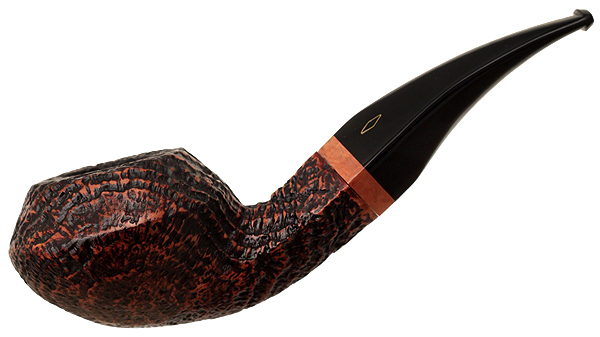
Bulldog or Rhodesian? (Diamond, Bent Shank)
Image source: www.smokingpipes.com

The controversy begins when the shank/stem are bent (instead of straight) or rounded (instead of diamond-shaped). Some feel that any bulldog-shaped bowl with a bent shank/stem is automatically a Rhodesian. Others, like me, distinguish between the shapes based upon the shape of the shank, whether or not the pipe is bent or straight. While this notion does not rise to the level of a "law," I believe it is the most common way of distinguishing the two shapes.

In the end, each pipe maker, collector, and enthusiast will make his own determination. But for me, a bulldog always has a diamond shank and a Rhodesian always has a rounded shank, regardless of straight or bent shank.

Thursday, September 27, 2012

Meerschaum Pipe Advantages (if any!)

Do Meerschaum-line briar pipes offer any particular advantage over regular briar pipes?

            Image source: thepipesmoker.wordpress.com

Because it does not contain any saps or resins like briar, Meerschaum does not typically impart a flavor to the smoke or alter the taste of the tobacco. By lining a briar pipe with this silicate mineral, one is supposedly able to more directly experience the true taste of the tobacco. However, many smokers actually prefer the subtleties and nuances of flavor contributed by their briar pipes. Additionally, as it is smoked, briar absorbs oils from the tobacco over time, which can actually increase the amount of flavor during a smoke. (This is why may smokers prefer to dedicate specific pipes to specific tobacco blends.)

Meerschuam pipes are definitely wonderful smoking instruments, and I have several in my own collection. But I prefer to keep the two materials separate and enjoy the qualities of each material on its own.

Tuesday, September 25, 2012

Covering a Tobacco Pipe while Smoking

Why do pipe smokers occasionally cover the bowl with their fingers while puffing on their pipes?

         Image source: news.bbc.co.uk

There are two basic reasons for this practice:
  1. If the bowl begins to grow cool, or if the tobacco ember is beginning to weaken, a classic means of keeping the pipe burning is to quickly introduce air by "carbureting" the bowl. This is what you often see smokers doing when they cover the bowl with their fingers while puffing. By covering and uncovering the bowl while puffing more robustly than usual, a repeated rush of air is forced over the ember, which helps restore better combustion and keeps the pipe burning (or at least that's the idea).

  2. Another reason for covering the bowl is the presence of too much moisture in the stem or shank of the pipe. Moisture is an unavoidable byproduct of combustion, but if it builds up too much, it can cause the pipe to gurgle or surprise the smoker with a mouthful of nasty juice. A simple technique for dealing with this is to blow gently but steadily INTO the stem for a few moments. This pushes the moisture out of the stem/shank and down into the heel of the bowl where it will no longer present a problem during the smoke. Of course, this process of blowing into the stem will cause ashes and debris to fly out of the bowl, creating quite a mess. So the smoker will momentarily cover the bowl with his fingers to prevent this from happening.

Sunday, September 23, 2012

Sanitizing an Estate Pipe Stem

Is there a quick and easy way to sanitize an estate pipe stem?

With this article I want to focus on the cleaning aspect of what I already talked about in my article on pipe stem sanitizing.

           Image source: rebornpipes.wordpress.com

When I refurbish pipes for myself or others, hygiene and safety is of the highest concern. For this reason, I go through several steps to thoroughly sanitize a stem or mouthpiece. But depending on the condition of the stem, there is a simple method, which I will describe here.

You will need some high-quality alcohol. In order to have a sterilizing effect, the alcohol content must be above 50%. I prefer to use Isopropyl Alcohol that is 91% alcohol. This ensures a "medical grade" sanitizing effect and evaporates quickly. It is also much less expensive than grain alcohol. You will also need some pipe cleaners and a small container in which to soak the stem.
  • First, clean the stem by removing any debris and residue (tobacco bits, tar build-up, nicotine residue, etc.).
  • Second, dip a pipe cleaner in the alcohol and run it through the stem. I recommend doing this several times and "scrubbing" as necessary. Bristle pipe cleaners work great for this step.
  • Third, soak the stem in a bowl or container so that the stem is completely covered by the alcohol. I recommend soaking it for about 15 minutes (or longer if necessary to dissolve residue). If the alcohol discolors during the soak, that means tar and other residue were being dissolved by the alcohol. If this occurs, discard the alcohol and scrub the stem with some more pipe cleaners. Then fill the container with fresh alcohol and perform the soak again. This way you are ensured of a truly clean and sanitized stem.
  • Once finished with the soaking. Simply rinse the stem in cold water and dry it off. It should now be completely sanitized!

Friday, September 21, 2012

How to Break In a New Pipe

Recommendations to break-in a new pipe

Not everyone agrees about the “perfect” technique for breaking in pipes. Some smokers even believe there is no need to break-in a pipe, simply fill it up and smoke it. While I agree that there is freedom to do what works best for you, I recommend the simple break-in method outlined below. But first, here are a couple quick remarks about the purpose of the break-in process:

Even when briar has been dried and treated, it still retains a certain amount of sap, resin, and natural acids. These things affect the ability of the wood to absorb moisture, withstand heat, etc. They also can impart a flavor to the tobacco as you smoke it. The break-in process helps to rid the wood of these remaining substances, making it more pleasant to smoke.

         You need to ream the caking, or this will happen
         Image source: rebornpipes.wordpress.com

In order to protect the bowl from the heat of burning tobacco and to aid in the absorption of moisture that results from combustion, it is important to develop a carbon cake inside the tobacco chamber. The break-in process helps to properly develop this carbon cake, which is simply a layer of charred residue that builds up inside the bowl as tobacco is burned.

With these simple factors in mind, I’ll briefly describe how you can break-in a pipe and begin the “seasoning” of the briar. Here is a simple method that will help you to break-in a new (or refurbished) pipe.

I do not recommend coating the inside of the tobacco chamber with honey, alcohol, or water. Instead, start with a full bowl of loosely packed tobacco. Of course it must be packed tightly enough to burn, but pack it more loosely than usual. Some people will prefer to start with only a third or half a bowl and slowly build it up to a full bowl over four or five smokes, but this is not necessary. As long as you smoke slowly and gently, the amount of tobacco in the bowl really makes no difference, so simply decide which is more appropriate for you.

As I noted above, the most important factor for breaking in a pipe is that you smoke slowly, making sure that the pipe does not overheat, and that you smoke all the way down to the bottom of the bowl. If possible, it is desirable to burn all the tobacco to the bottom of the bowl. This will help develop a cake in the heel of the bowl.

So fill your pipe loosely, sit back and enjoy your first smoke. Do not hurry. If the pipe gets too hot, put it aside, and let it cool down. It does not matter if your pipe goes out, just relight it and continue to smoke slowly all the way down to the bottom. When you’ve finished burning all the tobacco (this may require several relights), then loosen the grey ash with a pipe tool and while covering the top of the bowl with your fingers or hand, shake the pipe a few times. This action will spread and deposit fine ash on the walls inside the bowl and will help to build up a nice cake more quickly. Remove the remains of the ashes from the bowl.

Once your pipe cools down, be sure to clean it thoroughly and then allow the pipe to rest before smoking it again. Keeping your pipe dry and clean is the secret to an enjoyable smoking experience.

Pipe smoking is often called the "art of patience"; it is intended to be a pleasure that you savor and enjoy. So don't be in a hurry and try not to get intimidated by the details. Just try to form good habits and take good care of your pipes. You'll be rewarded by a great smoke and lifetime of happy puffing.

Wednesday, September 19, 2012

Tobacco Pipe Carbon Cake

What is carbon cake and how long does it take to develop?

Developing a good cake can take quite some time, so they key ingredient is patience! Beyond that, there are several factors that affect cake development, such as the tobacco you smoke, the briar itself, and your own smoking habits. Because of these and other variables, there is no standard time frame in which a cake develops, and each pipe will likely take a different amount of time.

Some pipes may begin developing a cake after only a few bowls. But it's more common to take far longer. Depending on your smoking frequency, it's not uncommon to smoke ten, twenty, or thirty bowls before you notice the evidence of a carbon cake beginning to form. I've seen some pipes take over a hundred bowls before they developed a decent carbon lining in the bowl.

New smokers often wonder what the cake looks like. Once the cake starts forming, it will be unmistakable. It is a hard, black residue that lines the inner walls of the bowl. In appearance, it looks like a thin layer of coal. After a cake begins to form, it's simply a matter of managing it by careful reaming to maintain the desired thickness. As a general rule of thumb, the cake should be kept at the thickness of a dime, or about 1-3 millimeters. If it gets too thick, it can actually crack the bowl of your pipe, because it expands at a different rate than the briar. Typically, you normally don't want to completely ream the bowl (unless you are restoring pipes), since you would then have to break it in all over again.

One of the most common problem areas for cake development is bottom of the tobacco chamber. This is where moisture tends to pool during a smoke. This makes the tobacco in the heel of the bowl difficult to burn and many folks understandably dump it out rather than fry their tongues trying to burn it to ash. This combination of moisture and unburned tobacco greatly retard or even prevent the development of carbon at the bottom of the tobacco chamber.

Another common problem is the cake forming unevenly. If the cake is thicker in some spots than in others, it's a good idea to ream the cake to make it even. If left to develop unevenly over time, it can create a bottleneck effect, making it difficult to fill and clean the bowl. As noted above, the uneven cake can also produce adverse effects on the briar due to expansion and contraction during combustion.

Although it is desirable to develop an even carbon layer throughout the bowl, it should not be something that detracts from your enjoyment of pipe smoking. Many folks spend far too much time being concerned about this. Remember, you didn't start smoking so that you could go around developing carbon cake inside pipe bowls! Hopefully, you chose to smoke because you enjoy it for various reasons. The carbon cake, while important, shouldn't become a matter that you obsess about. Simply enjoy your pipes, and the cake will develop naturally over time. If it isn't perfect, don't worry; it can be easily maintained with a simple pipe reamer.

Below are a couple photos of a pipe with clearly developed carbon cake. These photos are not perfect guideline examples, but they will give you some concrete idea of what the carbon cake looks like.


This pipe has a damaged and charred rim--something that can be avoided by exercising care with your pipes. It is NOT necessary to have carbon build-up on the rim in order to develop cake in the bowl. A little care and regular cleaning can keep the rim looking good.

Tuesday, September 18, 2012

Pipe Flaws and Burnout

Should you be worried about chips, pits, and flaws in your pipe? Can these lead to a burnout?

Nearly every briar pipe has some sort of natural flaw, such as minor pits, splits, or other imperfections in the wood. Often these imperfections are so tiny they cannot be seen with the naked eye, and the craftsman will also take measures to make them "invisible" through adroit shaping, use of rustication, sandblasting, etc. However, if the imperfections are too large they affect not only the aesthetics, but, much worse, the smokability of the pipe.

         Image source: pipesmagazine.com


It's very difficult to give specific advice about a pipe without being able to examine it. But if you detect a crack in the briar that is clearly visible, it could indicate a potential problem.

A burnout occurs when overheating causes a hole to be burned completely through the wood. Cracks and splits can also occur due to overheating, but they are technically not considered burnouts. If the briar was improperly cured, or if it has been improperly cared for, the heat and moisture absorption can cause the wood to expand excessively and split.

Also, the temperature of the bowl is very significant. If the pipe becomes uncomfortable to hold, it is definitely burning too hot. Most often this is a result of improper smoking technique, but it can sometimes be caused by the qualities of the briar or pipe design itself. In either case, if the bowl becomes too hot, it is definitely time to set the pipe down. Some folks say if you cannot comfortably hold the pipe against your face, then it is too hot. In such cases, simply let it go out and cool down a bit before relighting.

If the crack in your pipe worsens, the pipe may be rendered unsmokable. But in many cases, a skilled pipe repairman can restore the pipe to smokable condition. The cost will vary depending on the necessary repairs, but if it is a favorite pipe or one with high value, the expense can easily be justified.

Wednesday, September 5, 2012

Adjusting Butane Lighter Flame for Tobaco Pipe

So you can't adjust the flame on you butane lighter. Suggestions.


Since every company uses a unique system for adjusting the flame of the lighter, it is difficult to offer suggestions about your specific lighter.

Occasionally, I have found it necessary to disassemble a lighter and make corrections to the adjustment mechanism. Although it's not an overly technical process, it would be very difficult to describe it here, especially without details concerning your particular lighter.

However, it is far more common to encounter problems caused by the need for a thorough cleaning or proper refilling. This is especially true with refillable lighters that have been in use for several years. Assuming your lighter does not have an actual mechanical problem with its internal fittings (which would require repair or replacement), here are some general tips and suggestions that may help resolve the issues you're experiencing:
  • Completely bleed the air and any remaining butane from the lighter before refilling. Do this by carefully depressing the filling nozzle on the lighter with a small tool. You will hear a hissing sound as air and small amounts of butane are expelled. Repeat until the hissing stops. Be careful not to bend or damage the nozzle, which will prevent proper filling.
  • Use compressed air to clean out the flame nozzle of the lighter.
  • Use a cotton swap dipped in alcohol to clean and remove soot buildup on the lighter. This will help clear out any residue or debris that may prevent the lighter from working properly.
  • Turn the flame adjustment knob back and forth several times through its entire range of motion. Then place it to a medium setting before refilling or using it.
  • When filling the lighter, be careful not overfill with butane. Depress the butane canister on the lighter for 1-3 seconds, then release. Repeat this 2-3 times until the lighter is filled.
  • Do not use the lighter immediately after filling. The filling process causes the internal nozzles and gas fittings to become very cold, and the lighter becomes "frozen," so to speak. Simply wait five to ten minutes until the lighter has reached room temperature before trying to use it.